Level Slabs That Support Equipment and Vehicle Loads
Concrete Flooring & Slabs in New Baltimore for garage floors and structural flatwork installations
Motz Construction LLC installs concrete slabs for residential garages, storage sheds, workshops, and commercial spaces that require a flat, reinforced surface capable of supporting vehicles, equipment, and shelving without settling or cracking. If you are building a new garage, replacing a failing floor, or adding a foundation-style slab for storage or work areas, you need a pour that accounts for soil stability, proper drainage, and the weight the slab will carry over time.
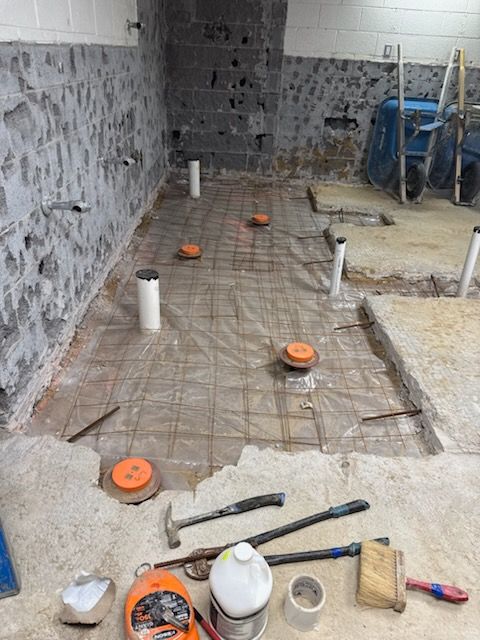
The installation begins with excavation to the required depth, followed by compaction of the subgrade and placement of a gravel base that prevents moisture from migrating upward and causing surface deterioration. Steel reinforcement or wire mesh is positioned before the pour to add tensile strength, and the concrete is finished with either a smooth trowel for interior floors or a broom finish for exterior slabs where traction is needed. Control joints are cut or formed to manage shrinkage cracks, and the edges are formed to create clean, defined perimeters.
If you need a garage slab that can handle daily vehicle parking or a shed floor that supports lawn equipment and seasonal storage, reach out to Motz Construction LLC for an estimate that includes base preparation, reinforcement, and finish options suited to your use case.
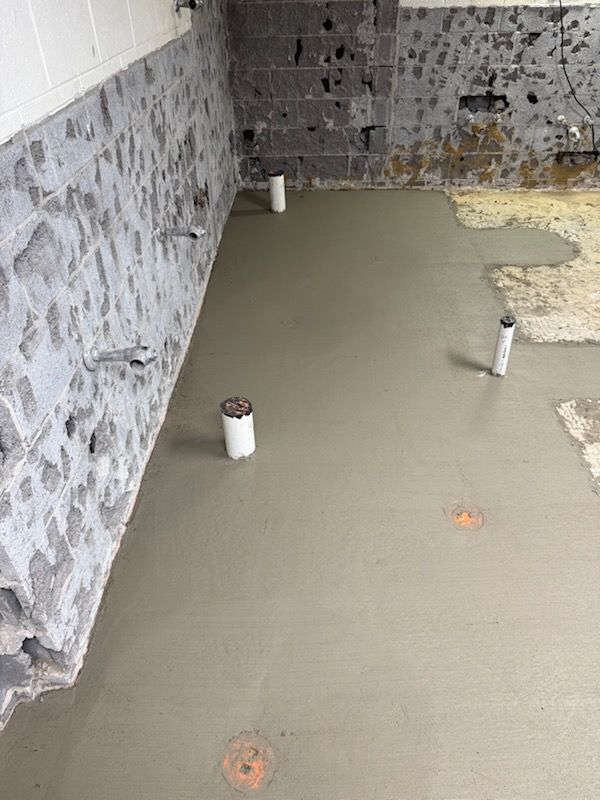
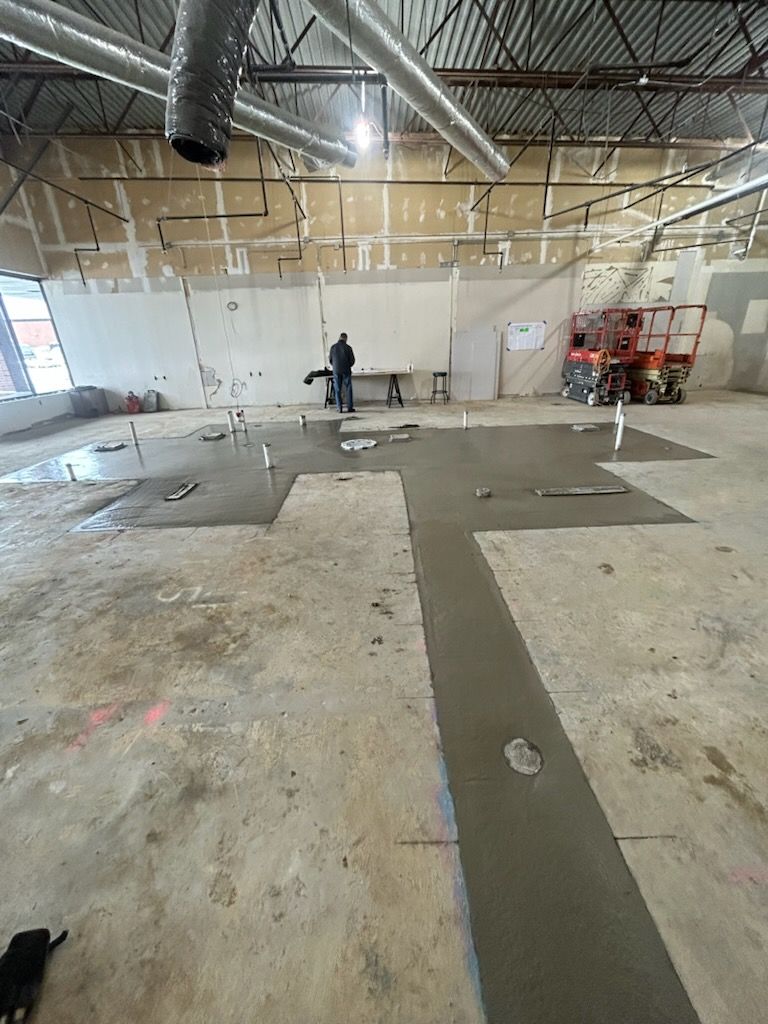
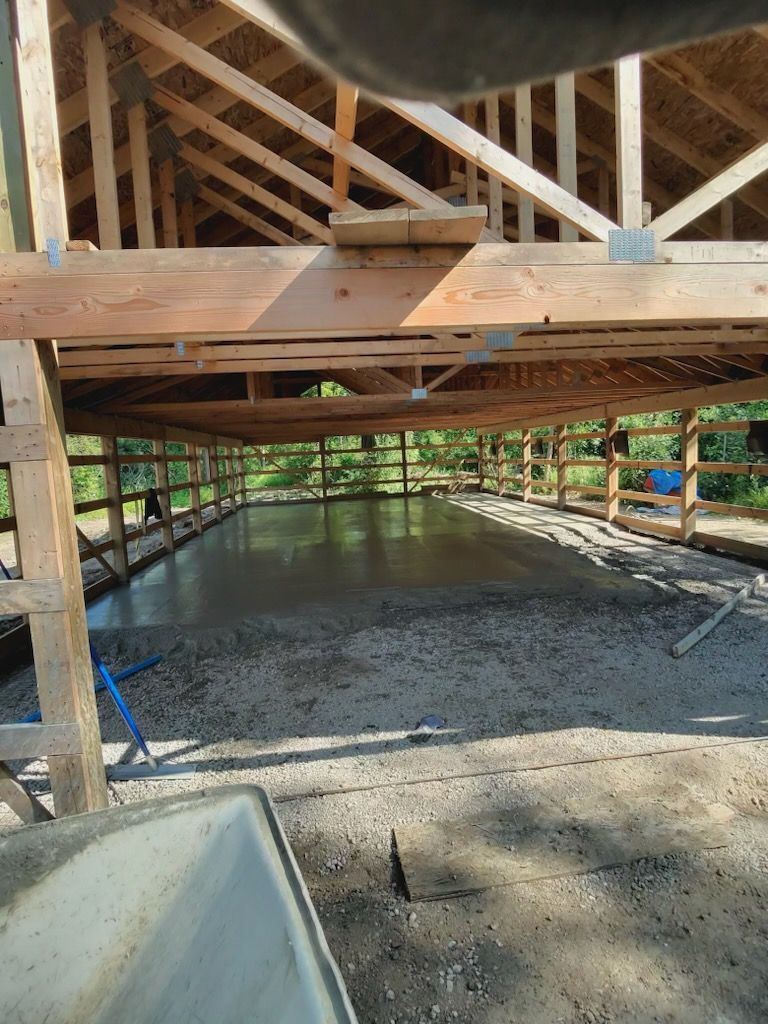
How Slabs Are Poured to Prevent Settling and Surface Failure
The work requires careful attention to subgrade compaction because any soft spots or organic material left in the soil can cause the slab to settle unevenly. The gravel base is placed in lifts and compacted to provide a stable, well-drained foundation for the concrete. Vapor barriers are installed when moisture control is needed, particularly for interior slabs where flooring or finishes will be applied later. The concrete is poured in sections if the area is large, and control joints are placed to prevent random cracking as the slab cures and contracts.
After the installation is complete, you will notice a level surface free from high spots or dips, clean edges that align with walls or door openings, and a finish appropriate for the intended use. Motz Construction LLC ensures that the slab is properly cured before heavy loads are placed on it, and that any required anchors or sleeves for equipment or utilities are positioned during the pour.
This service is used for garage floors, pole barn foundations, equipment pads, and commercial storage areas. It does not include decorative finishes, heated slabs, or epoxy coatings, though the slab can be finished to accommodate those additions later. If the site requires grading, drainage correction, or removal of unsuitable soil, that work is completed before the base preparation begins.
Questions Homeowners and Business Owners Ask About Slab Installation
These questions clarify how slabs are designed to support loads, how long curing takes, and what finish options are available for different applications.
How thick does a garage slab need to be in New Baltimore?
Residential garage slabs are typically four to six inches thick depending on vehicle weight and use. If you plan to park heavy trucks, recreational vehicles, or equipment, the thickness and reinforcement are increased to prevent cracking under load.
What prevents moisture from coming up through the slab?
A compacted gravel base and a vapor barrier installed below the concrete reduce moisture migration. Proper grading around the building also directs surface water away from the slab perimeter.
Can the slab be poured in cold weather?
Concrete can be poured in cooler temperatures, but curing times are longer and protective measures such as insulated blankets or heated enclosures may be needed. The pour is scheduled to avoid freezing conditions that compromise strength development.
What is the difference between a smooth and broom finish?
A smooth trowel finish is used for interior floors where appearance and ease of cleaning matter. A broom finish adds texture and traction, making it better for outdoor slabs or areas exposed to water and ice.
How long before I can drive on a new garage slab?
You should wait at least seven days before parking vehicles on the slab, and longer if you plan to drive heavier trucks or equipment. Full curing takes several weeks, but initial strength develops within the first week.
When you need a durable, level slab that supports storage, equipment, or daily vehicle use without developing cracks or settling, Motz Construction LLC provides installation services that account for soil conditions, load requirements, and long-term performance across residential and commercial applications.